
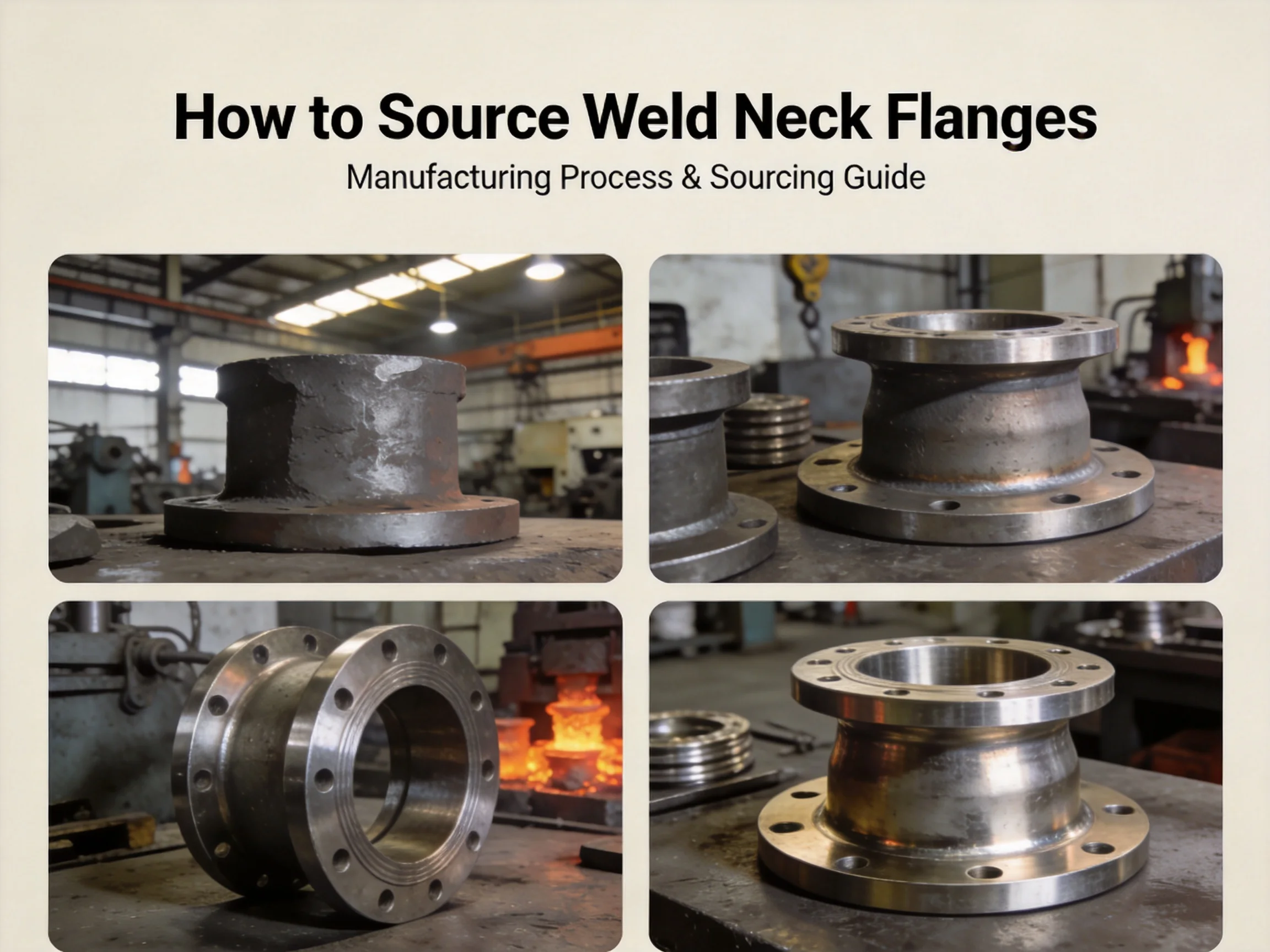
How to Source Weld Neck Flanges for Offshore Pipeline Projects – Complete Buyer’s Guide (2026)
This guide provides Caspian and CIS procurement engineers with a technical framework for sourcing weld neck flanges for demanding offshore pipeline applications. It focuses on critical specifications, certification verification, inspection requirements, and supplier evaluation, referencing international standards and regional regulations for 2026.
What Are the Key Specifications to Check When Buying Weld Neck Flanges?
For offshore pipeline projects, weld neck flanges must meet stringent dimensional, material, and design standards to ensure leak-free performance under high pressure and corrosive environments. The following specifications are non-negotiable.
1. Dimensional Standard: ASME B16.5 vs. ASME B16.47
For pipeline sizes up to 24 inches, ASME B16.5 is the default standard, covering Class 150 to 2500. For larger diameters (26 inches and above), ASME B16.47 Series A or B applies, with Series B offering a lighter hub profile for reduced weight on offshore structures. Always verify the flange facing (RF, RTJ) and bore diameter per the pipe schedule.
2. Material Grade and Corrosion Resistance
Offshore environments demand materials resistant to chloride stress corrosion cracking (SCC). For Caspian seawater injection or sour gas pipelines, consider duplex (UNS S31803/S32205) or super duplex (UNS S32750) stainless steel. For high-temperature or corrosive chemical service, nickel alloys like Inconel 625 (UNS N06625) or Hastelloy C276 (UNS N10276) are preferred. JIAJI FORGING supplies these specialized grades with full traceability.
3. Pressure-Temperature Rating and Wall Thickness
Weld neck flanges have a tapered hub that reinforces the connection, making them suitable for high-pressure classes (Class 600 to 2500). Check the pressure-temperature rating per ASME B16.5 Table 2 for the specific material group. For sour service (NACE MR0175/ISO 15156), hardness must be controlled (typically ≤ HRC 22 for carbon steel) to prevent sulfide stress cracking. JIAJI FORGING offers NACE-compliant weld neck flanges with certified hardness reports.
4. Face Finish and Gasket Compatibility
The flange face finish (125-250 μin Ra for raised face) is critical for gasket sealing. For offshore pipelines, spiral wound gaskets or RTJ gaskets are common. Verify the surface roughness meets ASME B46.1 requirements. For RTJ flanges, the groove dimensions must match API 6A or ASME B16.20 standards.
| Parameter | Typical Value | Standard | Critical for |
|---|---|---|---|
| Diameter range | 1/2″ to 60″ | ASME B16.5 / B16.47 | Pipeline size |
| Pressure class | Class 150 – 2500 | ASME B16.5 | Operating pressure |
| Material grade | Duplex S31803, Super Duplex S32750 | ASTM A182 / A105 | Corrosion resistance |
| Face finish | 125-250 μin Ra | ASME B46.1 | Gasket sealing |
| Hardness (sour service) | ≤ HRC 22 | NACE MR0175 | SSC prevention |
How to Verify Material Certification (EN 10204 3.1 vs 3.2)?
Material certification is the cornerstone of quality assurance for offshore flanges. EN 10204 defines two key types: Type 3.1 (inspection certificate) and Type 3.2 (witnessed inspection). The choice depends on project risk and client requirements.
1. EN 10204 Type 3.1: Manufacturer Declaration with Testing
Type 3.1 certifies that the manufacturer has performed all required tests (chemical analysis, mechanical properties) and declares compliance with the order. The certificate is issued by the manufacturer’s authorized inspector, not a third party. This is acceptable for standard pipeline applications where the buyer trusts the supplier’s quality system. JIAJI FORGING provides Type 3.1 certificates for all standard flanges.
2. EN 10204 Type 3.2: Independent Witnessed Testing
Type 3.2 requires a third-party inspection agency (e.g., DNV, Lloyds, Bureau Veritas) to witness the tests and sign the certificate. This is mandatory for critical offshore applications, such as subsea pipelines or high-pressure gas injection. The agency must be approved by the project owner. When sourcing from JIAJI FORGING, specify “3.2 certification with DNV” in your RFQ.
3. Traceability and Mill Test Reports (MTR)
Every flange must have a unique heat number stamped on the hub, matching the MTR. The MTR must include: ladle analysis, product analysis (if required), tensile strength, yield strength, elongation, reduction of area, impact test (for sub-zero service), and hardness values. For duplex stainless steel, also verify ferrite content (typically 35-65%).
4. GOST Certification for CIS Countries
For Kazakhstan and other CIS markets, flanges may require GOST-R or EAC certification. The material certificate must often be translated into the local CIS language and stamped by a local notary. JIAJI FORGING can arrange GOST-compliant documentation through accredited partners.
What NDT Methods Are Required for Weld Neck Flanges?
Non-destructive testing (NDT) ensures the flange is free from internal defects that could cause failure under pressure. For offshore pipeline flanges, a combination of methods is standard.
1. Ultrasonic Testing (UT) for Laminations and Inclusions
UT is performed on the flange face and hub to detect internal laminations, inclusions, or cracks. Acceptance criteria per ASTM A388 or ASME Section V. For critical service, 100% UT scanning is required, with a rejection threshold for any indication greater than 1/16″ (1.6 mm).
2. Magnetic Particle Testing (MT) for Surface Cracks
MT (wet fluorescent) is applied to the flange face, hub, and bore to detect surface or near-surface cracks. This is mandatory for ferritic materials. Acceptance per ASME Section VIII, Div. 1, Appendix 8 or API 6A. For duplex stainless steel, use dye penetrant (PT) instead, as MT is less effective on austenitic phases.
3. Radiographic Testing (RT) for Weld End Preparation
For flanges with weld neck ends, RT of the weld bevel area may be required to ensure no cracks or inclusions exist that could propagate during welding. This is common for sour service (NACE MR0175) or subsea applications.
4. Hardness Testing for Sour Service
Per NACE MR0175, hardness must be measured at three locations: flange face, hub, and bore. Maximum allowable hardness depends on material: carbon steel ≤ HRC 22, duplex ≤ HRC 28. JIAJI FORGING performs hardness testing on every NACE-compliant flange and includes the results in the MTR.
| NDT Method | Application Area | Standard | Acceptance Criteria |
|---|---|---|---|
| UT | Face, hub | ASTM A388 | No lamination > 1/16″ |
| MT (wet fluo.) | Face, hub, bore | ASME Section V | No linear indications |
| PT (dye) | Surface (duplex) | ASTM E165 | No cracks |
| Hardness | 3 locations | NACE MR0175 | ≤ HRC 22 (CS) |
How to Evaluate Supplier Manufacturing Capability?
Supplier capability determines whether flanges meet tight tolerances, delivery schedules, and quality standards. Evaluate these five areas before placing an order.
1. Forging Process: Open Die vs. Closed Die
Weld neck flanges are typically produced by open-die forging (up to 24 inches) or ring rolling (larger sizes). The supplier must have a press capacity of at least 2000 tons for large flanges. Check if they use controlled forging temperatures to avoid grain growth. JIAJI FORGING operates 3000-ton and 5000-ton presses, capable of forging flanges up to 60 inches.
2. Heat Treatment Capability
Solution annealing is critical for duplex and nickel alloys. The furnace must have precise temperature control (±10°C) and rapid quench capability to prevent sigma phase formation. Verify that the supplier has a certified furnace with a temperature chart recorder, calibrated per AMS 2750.
3. Machining Accuracy and CNC Capacity
Flange faces must be machined to a flatness tolerance of 0.002 inches per foot. The supplier should have CNC lathes with live tooling for drilling bolt holes to a pitch circle diameter tolerance of ±0.015 inches. JIAJI FORGING uses 5-axis CNC machines for complex RTJ grooves.
4. Quality Management System (QMS)
Look for ISO 9001:2015 certification as a minimum. For offshore projects, API Q1 or ISO 14001 (environmental) may be required. The supplier should have a documented NDT procedure and a dedicated QC team. JIAJI FORGING holds ISO 9001, API 6A, and PED 2014/68/EU certifications.
5. Third-Party Inspection Access
Ensure the supplier allows on-site inspection by your nominated agency (e.g., DNV, TUV) without additional fees. JIAJI FORGING has a dedicated inspection area and provides full access to manufacturing records.
Kazakhstan Import Regulations and Documentation Requirements
Importing flanges into Kazakhstan (and other CIS countries) requires compliance with local technical regulations and customs procedures. Failure to provide correct documents can delay shipments by weeks.
1. EAC Declaration of Conformity (EAC DoC)
Flanges for pressure equipment must have an EAC DoC (TR CU 010/2011 or TR CU 032/2013). The supplier must provide a certificate issued by a certification body accredited in the EAEU. JIAJI FORGING can arrange EAC certification through its partner in Almaty.
2. Customs Clearance Documents
Required documents include: commercial invoice, packing list, bill of lading, certificate of origin (Form ST-1 for CIS preferential tariff), material certificate (EN 10204 3.1 or 3.2), and NDT reports. All documents must be in the local CIS language or accompanied by a notarized translation.
3. Technical Passport (Паспорт)
For pressure equipment, Kazakhstan requires a technical passport that includes: flange dimensions, material grade, heat number, test results, and manufacturer’s declaration. This document must be stamped by the manufacturer and translated into the local CIS language.
4. Pre-Shipment Inspection by Local Agent
Many Kazakh buyers require a pre-shipment inspection by a local agent (e.g., SGS or Bureau Veritas) in the supplier’s country. The inspection covers dimensional checks, visual inspection, and document verification. JIAJI FORGING coordinates with your nominated agent for seamless inspection.
Typical Lead Times and MOQ for Weld Neck Flanges
Lead times depend on material availability, size, and certification requirements. Plan your procurement timeline accordingly.
1. Standard Carbon Steel Flanges (ASTM A105)
For sizes up to 24 inches, standard lead time is 4-6 weeks from order confirmation. Minimum order quantity (MOQ) is typically 10 pieces per size. JIAJI FORGING stocks common sizes (2″ to 12″, Class 150/300) for immediate shipment.
2. Duplex and Super Duplex Flanges (A182 F51/F53)
Due to raw material sourcing and heat treatment requirements, lead time is 8-12 weeks. MOQ is 5 pieces per size for standard dimensions. For non-standard bore diameters (e.g., heavy wall pipe), add 2-4 weeks for custom machining.
3. Nickel Alloy Flanges (Inconel, Hastelloy)
Lead time is 12-16 weeks due to limited raw material supply and complex forging parameters. MOQ is 3 pieces per size. JIAJI FORGING recommends ordering 6 months in advance for large offshore projects.
4. Expedited Delivery Options
For urgent orders, JIAJI FORGING offers accelerated production (air freight for raw material) at a 15-20% surcharge. This can reduce lead time by 30-40%.
Price Factors: What Affects Weld Neck Flanges Cost?
Flange pricing is driven by material, size, pressure class, and certification complexity. Understanding these factors helps in budgeting and negotiation.
1. Material Cost (50-60% of Total)
Nickel alloys (e.g., Inconel 625) cost 4-5 times more than duplex stainless steel, and 8-10 times more than carbon steel. Raw material prices fluctuate with global nickel and molybdenum markets. For 2026, expect duplex flanges to cost $80-150/kg, versus $15-30/kg for carbon steel.
2. Size and Pressure Class (20-30% of Total)
Larger diameters and higher pressure classes require more raw material and longer machining time. A 24″ Class 150 flange costs about $2,000, while a 24″ Class 2500 flange can exceed $10,000. The hub length also increases with pressure class, adding material weight.
3. Certification and Testing (10-15% of Total)
Type 3.2 certification adds 5-10% to the cost due to third-party inspection fees. Additional NDT (100% UT, RT) can add 3-5%. Hardness testing for NACE compliance is typically included in the base price.
4. Quantity and MOQ
Orders below MOQ incur a 10-15% surcharge for setup and material handling. Bulk orders (50+ pieces) can reduce per-unit cost by 5-10% due to economies of scale in forging and machining.
FAQs: 8 Questions Buyers Ask About Weld Neck Flanges
Q: What is the difference between a weld neck flange and a slip-on flange?
A: A weld neck flange has a tapered hub that provides reinforcement, making it suitable for high-pressure and high-temperature applications where cyclic loading is present. Slip-on flanges have lower strength and are not recommended for offshore pipelines.
Q: Can I use carbon steel flanges for sour gas service?
A: Yes, but only if they meet NACE MR0175/ISO 15156 requirements, including hardness ≤ HRC 22 and controlled sulfur content. For severe sour service, duplex stainless steel is preferred.
Q: What is the maximum pressure rating for a Class 150 weld neck flange?
A: At 100°F (38°C), a Class 150 carbon steel flange is rated for 285 psi (19.6 bar). Ratings decrease with temperature; at 500°F (260°C), it drops to 150 psi (10.3 bar).
Q: How do I verify that a flange is forged, not cast?
A: Forged flanges have a directional grain structure visible on the hub surface. Cast flanges have a rough surface and may show porosity. Always request a forged certification per ASTM A182 or A105.
Q: What is the minimum wall thickness for a weld neck flange hub?
A: Per ASME B16.5, the hub taper must be 1:3 (rise:run) minimum. The hub thickness at the weld end must match the pipe wall thickness plus 1/16″ (1.6 mm) for welding.
Q: Are RTJ flanges required for subsea pipelines?
A: Yes, ring-type joint (RTJ) flanges with oval or octagonal gaskets are standard for subsea applications because they provide metal-to-metal sealing that withstands high external pressure.
Q: How long does it take to get a GOST certificate for flanges?
A: GOST certification typically takes 4-6 weeks if the supplier provides all required documents. JIAJI FORGING can expedite this through its EAEU partner.
Q: Can JIAJI FORGING supply flanges with special bore diameters for heavy wall pipe?
A: Yes, JIAJI FORGING offers custom boring to match any pipe schedule (XS, XXS, or special). Provide the pipe OD and wall thickness in your RFQ for a tailored quote.
For a detailed quote or technical consultation, visit JIAJI FORGING and specify your project requirements. Our team supports Caspian buyers with EAC documentation and on-site inspection coordination.
Related Products & Resources from JIAJI FORGING
- How to Source Blind Flanges for High Pressure Vessel Applica
- Duplex 2205 vs Super Duplex 2507 Flanges: Material Selection
- Top 7 GOST 33259 Flange Suppliers for Caspian & CIS Oil
- Industrial Forging: The Backbone of High-Performance Manufac
- Large Diameter Weld Neck Flange Guide: ASME B16.47 Series A
For more information, visit jiajiforging.com or contact us.