
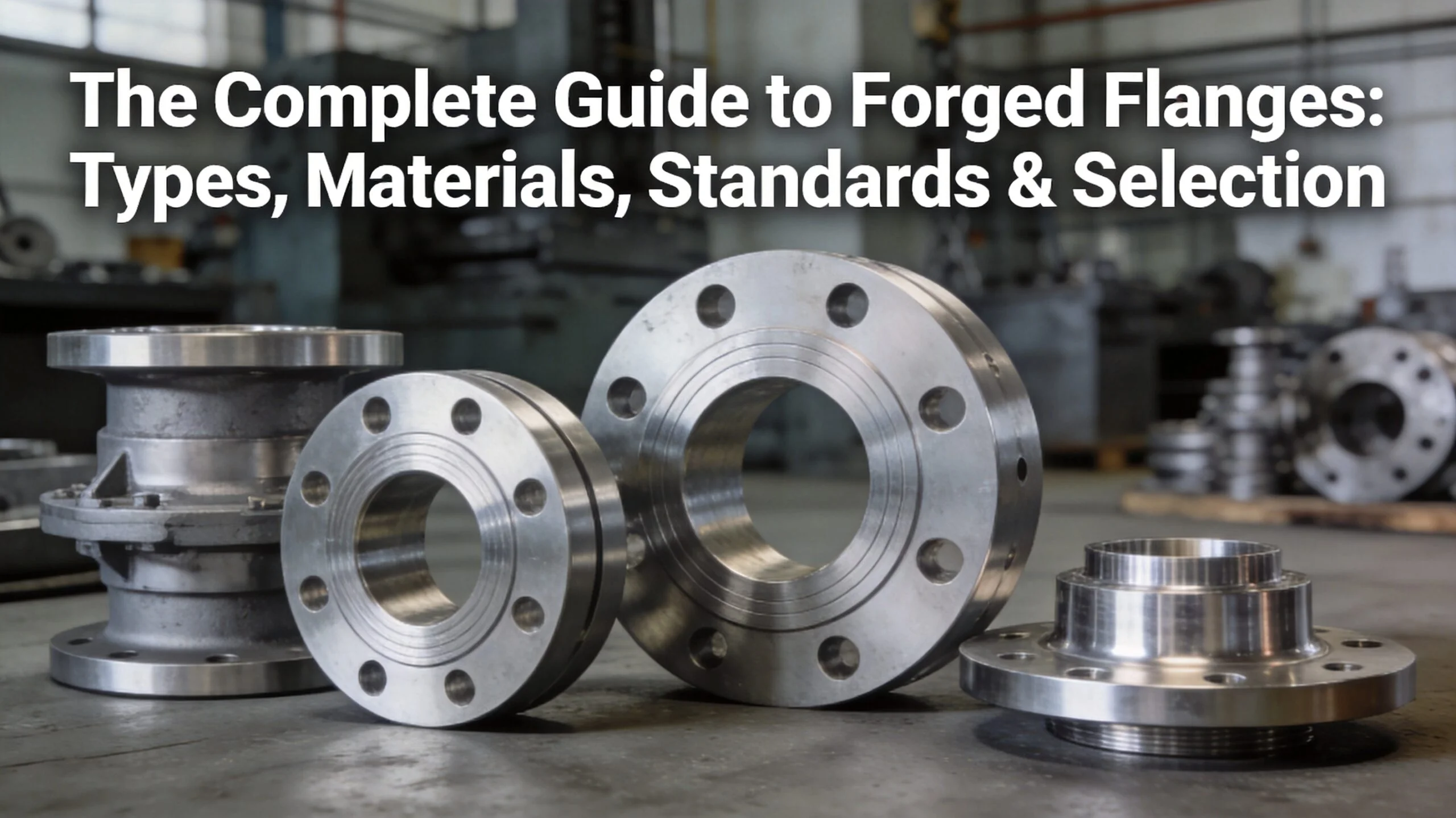
# The Complete Guide to Forged Flanges: Types, Materials, Standards & Selection

You’re staring at a flange specification sheet with twelve material options, eleven flange types, and three different standard systems — and the wrong choice could mean a pipeline failure under pressure. **Forged steel flanges** are the critical connection points in every pressurized piping system, and selecting the right one isn’t just about matching bolt holes. It’s about understanding how forging grain structure affects pressure integrity, why a GOST flange differs from its ASME counterpart, and which material actually survives in a sour gas environment.
If you’ve ever felt overwhelmed by the sheer volume of flange specifications — you’re not alone. Most engineers and procurement professionals spend hours cross-referencing standards, material grades, and pressure ratings before placing an order. This guide eliminates that confusion. By the end, you’ll have a complete reference covering every forged flange type, material grade, international standard, and a practical 6-step selection framework you can use on your next project.
> **Key Takeaways**
> – Forged flanges offer 20–30% higher mechanical strength and significantly lower defect rates than cast alternatives, making them the standard for high-pressure and critical-service applications.
> – Duplex stainless steels (F51/F53/F55) provide roughly double the yield strength of austenitic grades while delivering superior corrosion resistance — often at a lower total cost of ownership.
> – GOST 33259 flanges are mandatory for projects in Central Asia and CIS countries; they use unique type designations and PN ratings that do not map directly to ASME dimensions.
> – The Nipoflange integrates a branch outlet and flange in a single forging, reducing weld joints by one and cutting installation time by up to 30% compared to a Weldolet + flange combination.
> – PED-AD2000 certification (issued by TÜV SÜD) is essential for any flange sold into the European Union for pressure equipment service above 0.5 bar.
## Types of Forged Flanges (Complete Reference)
Pick the wrong flange type and you’ll either waste money on features you don’t need — or introduce a failure point your system can’t afford. Here’s a complete breakdown of all eleven types.
### Quick Reference Table
| Flange Type | Attachment Method | Pressure Range | Key Application | Relative Cost |
|—|—|—|—|—|
| Weld Neck | Butt weld | Class 150–2500 | High-pressure, critical lines | High |
| Slip-On | Fillet weld (x2) | Class 150–600 | Low-pressure, non-critical | Low |
| Blind | Bolting (no weld) | Class 150–2500 | Line closure, testing | Low–Medium |
| Socket Weld | Fillet weld | Class 150–3000 | Small bore (≤DN 50), high-pressure | Medium |
| Threaded | Threaded (no weld) | Class 150–600 | Instrument connections, no-weld zones | Low |
| Lap Joint | Stub end + bolting | Class 150–600 | Frequent disassembly, alloy systems | Medium |
| RTJ | Butt weld (WN type) | Class 600–2500 | High-pressure, high-temperature | High |
| Orifice | Butt weld (WN type) | Class 150–600 | Flow measurement | High |
| Spectacle Blind | Bolting | Class 150–2500 | Line isolation, safety | Medium |
| Long Weld Neck | Butt weld | Class 150–2500 | Vessel/tank nozzles | High |
| Nipoflange | Butt weld + flange | Class 150–2500 | Branch connections | Medium–High |

The 11 types of forged flanges are:
1. Weld Neck Flange — butt-welded, for high-pressure critical service
2. Slip-On Flange — fillet-welded, for low-pressure applications
3. Blind Flange — bolted, for line closure and testing
4. Socket Weld Flange — for small-bore high-pressure lines (≤DN 50)
5. Threaded Flange — no welding, for instrument connections
6. Lap Joint Flange — with stub end, for frequent disassembly
7. Ring Type Joint (RTJ) Flange — metal-to-metal seal for extreme conditions
8. Orifice Flange — with pressure taps for flow measurement
9. Spectacle Blind Flange — for positive line isolation
10. Long Weld Neck Flange — for vessel and tank nozzles
11. Nipoflange — integrated branch outlet + flange for pipeline branches
### Weld Neck Flange
The weld neck flange is the most critical type in any piping system — and the one you’ll specify most often. Its long, tapered hub transitions smoothly from the pipe wall thickness to the flange thickness, creating a butt weld joint with the same integrity as the pipe itself. This isn’t a minor engineering detail: that hub is the reason weld neck flanges handle cyclic loading, thermal stress, and high pressure better than anything else on this list.
Use it when the stakes are high — Class 300 and above, high-temperature service, cyclic loading, and anywhere a full-penetration weld is required by code. The trade-off? You need skilled welders and proper beveling, and it costs more than slip-on or socket weld types. But in critical service, this isn’t the place to save money. **The lowest risk of fatigue failure among all flange types** makes the weld neck the default for any line you can’t afford to have fail.
### Slip-On Flange
**When to use it:** Low-pressure, non-critical services (Class 150 and 300); applications where welding speed matters more than pressure integrity; situations where exact pipe length is uncertain (the flange allows some positional adjustment before welding).
**Watch out for:** Not suitable for high-pressure or cyclic service. Pressure rating sits at approximately 60% of weld neck at elevated temperatures. The double fillet welds can’t be radiographed for full inspection, and the gap between pipe and flange bore can trap corrosive media.
Slip-on flanges are the economical, fast-installation choice — as long as your service conditions allow it.
### Blind Flange
No bore. No weld. Just a solid disc bolted over the end of a line — and for that specific job, nothing else works better. Blind flanges seal pipeline ends, close nozzle openings, and provide access points for hydrostatic testing. They’re also the heaviest flange at large diameters, so make sure your bolt tensioning is sufficient to maintain the gasket seal under pressure.
### Socket Weld Flange
**The problem:** Butt-welding small-diameter pipe (DN 15 to DN 50) is impractical. The pipe is too small to align, too small to inspect, and the weld prep is fiddly and error-prone.
**The solution:** Socket weld flanges. The pipe slides into a shoulder (socket) before a single fillet weld is applied on the outside. No beveling required, easier to align, and good pressure integrity for small sizes up to Class 3000. Just be aware: the gap between the pipe end and socket shoulder can trap corrosive fluid — a crevice corrosion risk in aggressive services.
### Threaded (Screwed) Flange
Use it when you can’t weld. That’s the entire logic. Threaded flanges screw onto matching pipe threads (typically NPT per ASME B1.20.1) — no hot work permits, no welders, no waiting. They’re the fastest to install and ideal for explosive atmospheres, instrument connections, and fire protection systems. The catch: limited to Class 600 and below, vulnerable to vibration-induced loosening, and thermal expansion can break the thread seal.
### Lap Joint Flange
Lap joint flanges save money in alloy piping systems — here’s how. The stub end (which contacts the process fluid) is made from the expensive alloy — titanium, Hastelloy, super duplex. The backing flange (which never touches the fluid) can be plain carbon steel. For a 12-inch Hastelloy line, that’s the difference between a $4,000 flange and a $400 flange. The backing flange also rotates freely, making bolt-hole alignment effortless.
Stick to Class 600 and below, and avoid high-temperature cyclic service — the narrower gasket contact area on the stub end’s lap joint face isn’t designed for those conditions.
### Ring Type Joint (RTJ) Flange
Above Class 600 in oil and gas service, RTJ isn’t a preference — it’s the standard. The precision-machined grooves house metal ring gaskets (oval or octagonal cross-section) that plastically deform under bolt load, creating a pressure-energized metal-to-metal seal. As internal pressure increases, the seal gets tighter. Soft gaskets blow out under the same conditions. RTJ is also required by API 6A for wellhead equipment.
The downsides are practical: grooves require precise machining, ring gaskets are single-use, and the whole assembly costs more than raised face. In corrosive environments, rings can seize if not properly coated.
### Orifice Flange
Essentially a weld neck flange with extra tapped holes for pressure tap connections. Orifice flanges come in pairs and mount orifice plates for flow measurement — most commonly at custody transfer points in oil and gas pipelines where every barrel must be accounted for. Higher cost than standard weld necks, and installation requires careful centering of the orifice plate and correct orientation of the pressure taps.
### Spectacle Blind Flange
One component, two states: open and closed. A spectacle blind combines a solid blind flange and a spacer ring (with bore) connected by a web. Rotate it to switch between flow and isolation — and the visual confirmation of which state you’re in is a safety feature, not a side effect. For pipeline systems that require positive isolation before maintenance crews enter, spectacle blinds provide both function and proof.
Requires sufficient space to rotate between positions, and it adds length to the piping run since it sits between two flanges.
### Long Weld Neck Flange
When a standard weld neck hub isn’t long enough to reach through a vessel wall, insulation layer, or column shell — that’s where the long weld neck comes in. Its extended, uniformly thick hub provides built-in reinforcement at the nozzle, eliminating the need for separate reinforcement pads in many cases. Primarily used on vessels, tanks, and column nozzles where the additional reach and reinforcement are both required.
### Nipoflange
The Nipoflange is one of the most underutilized yet cost-effective branch connection solutions available — and most engineers don’t even know it exists.
**What is a Nipoflange?**
Think of a Nipoflange as a Weldolet and flange fused into a single forging. The run-pipe side features a beveled weld preparation for butt-welding to the header, while the branch side terminates in a standard flange face (Raised Face, RTJ, or Flat Face) for bolted connection to valves, instruments, or downstream piping.
**When to use a Nipoflange vs. a Weldolet + Flange combination:**
The traditional approach for a flanged branch connection is: weld a Weldolet to the header, then weld a short pipe nipple (niplet) to the Weldolet outlet, then weld a flange to the nipple. That’s **three weld joints** and three separate components.
A Nipoflange replaces all three components with a single forging, reducing the assembly to **two weld joints** (one on the header, one on the flanged connection is eliminated — it’s already part of the forging).
**Advantages in pipeline branch connections:**
– **One fewer weld joint** — each eliminated weld is one fewer potential failure point, one fewer NDT examination, and one fewer heat-affected zone
– **Up to 30% faster installation** — fewer welds, fewer fit-up operations, fewer inspections
– **Reduced crevice corrosion risk** — no annular gap between Weldolet and pipe nipple
– **Compact design** — ideal for congested pipe racks and offshore modules where space is at a premium
– **Better flow characteristics** — smooth internal transition from branch to flange bore
In 2023, a Caspian Sea offshore platform project switched from Weldolet + nipple + flange assemblies to Nipoflanges on 47 branch connections. The result: 47 fewer welds to inspect, a 12-day reduction in fabrication time, and an estimated $180,000 savings in welding, NDT, and labor costs.
**Ready to explore Nipoflange options for your project?** [Request a customized quote from Jiaji Forging →](https://jiajiforging.com/quote.html)
—
## Forged Flange Materials: From Carbon Steel to Nickel Alloys
Get the material wrong, and nothing else matters. You could have the perfect flange type with the right pressure class — in the wrong alloy, it’ll fail. Here are the five material families that matter.

### Material Comparison Overview
| Material Family | Common Grades | Min Yield (MPa) | Min Tensile (MPa) | Corrosion Resistance | Relative Cost | Typical Applications |
|—|—|—|—|—|—|—|
| **Carbon Steel** | A105, A350 LF2, A694 F52/F60 | 205–415 | 415–515 | Low (requires coating) | $ (baseline) | General service, non-corrosive fluids |
| **Austenitic SS** | F304, F304L, F316, F316L, F321, F347 | 205–240 | 485–515 | Good to excellent | $$ | Chemical, food, pharma, mild corrosive |
| **Duplex/Super Duplex** | F51, F53, F55, F60, F61 | 450–550 | 620–795 | Excellent (pitting/crevice) | $$$ | Seawater, chloride, H₂S service |
| **Alloy Steel** | F5, F9, F11, F22, F91 | 205–415 | 415–620 | Moderate (with Cr/Mo) | $$ | High-temperature steam, power gen |
| **Nickel Alloy** | Inconel 625, Hastelloy C276, Monel 400 | 276–414 | 621–758 | Exceptional | $$$$ (> $50/kg) | Severe corrosion, acid, offshore |
### Carbon Steel Forged Flanges (ASTM A105, A350, A694)
Carbon steel is the workhorse material for forged flanges — it accounts for the majority of flanges installed worldwide.
**ASTM A105** is the most commonly specified carbon steel forging grade. Per the standard, A105 has a minimum tensile strength of **485 MPa (70 ksi)** and a minimum yield strength of **250 MPa (36 ksi)**. It’s suitable for temperatures from -29°C to 538°C in non-corrosive services.
**ASTM A350 LF2** is the low-temperature counterpart, with Charpy impact testing required at -46°C. It’s the standard specification for cryogenic and cold-weather applications.
**ASTM A694** covers high-strength carbon and low-alloy steel flanges for high-pressure transmission service (F52 through F70 grades).
Carbon steel flanges are economical and widely available, but they require corrosion protection — painting, galvanizing, or cladding — for any service involving moisture, chlorides, or corrosive media.
### Stainless Steel Forged Flanges (ASTM A182 F304/F316/F321/F347)
Austenitic stainless steel flanges provide excellent corrosion resistance without the cost of nickel alloys. The key grades:
– **F304 / F304L** — General-purpose stainless; good corrosion resistance in atmospheric and mildly corrosive environments; 304L’s lower carbon content eliminates sensitization during welding.
– **F316 / F316L** — The addition of 2–3% molybdenum significantly improves pitting and crevice corrosion resistance; the standard choice for chemical processing, pharmaceutical, and marine applications.
– **F321 (Ti-stabilized) / F347 (Nb-stabilized)** — Stabilized grades prevent intergranular corrosion after extended exposure in the 425–870°C range; used in high-temperature refinery and power generation service.
– **F316Ti** — Titanium-stabilized 316 for European specifications; bridges the gap between 316L and 321 for intermediate-temperature corrosive service.
### Duplex & Super Duplex Forged Flanges (ASTM A182 F51/F53/F55/F60/F61)
Duplex stainless steels are the sweet spot where performance meets cost-effectiveness — and this is where Jiaji Forging has built its deepest expertise.
The key advantage: duplex grades offer **roughly double the yield strength** of austenitic stainless steels (Source: [Advances in Duplex Stainless Steels, NIH/PMC](https://pmc.ncbi.nlm.nih.gov/articles/PMC9608718/)). This means you can often use thinner, lighter flanges — or achieve higher pressure ratings with the same dimensions — while getting superior corrosion resistance.
**Standard Duplex (F51 / UNS S31803 / 2205):** Yield strength ≥ 450 MPa; excellent resistance to chloride stress corrosion cracking; widely used in seawater, chemical processing, and oil & gas applications.
**Super Duplex (F53 / UNS S32750 / 2507):** Yield strength ≥ 550 MPa; pitting resistance equivalent number (PREN) > 40; the standard for offshore, subsea, and aggressive chloride environments.
**Hyper Duplex (F55 / UNS S32760 / Zeron 100 / F61 / UNS S31254 / 254 SMO):** The highest performance duplex grades; PREN > 40 with added tungsten or copper for enhanced resistance to localized corrosion in severe service.
In a 2024 Middle East desalination plant upgrade, engineers specified Super Duplex F53 flanges (ASTM A182) for the high-pressure reverse osmosis section. The result: flanges with 2× the yield strength of 316L allowed the same pressure rating at one size class smaller, reducing overall weight by 18% and material cost by 12% compared to the austenitic alternative — while delivering far superior resistance to chloride pitting.
**Looking for duplex and super duplex flanges with full traceability?** [Browse 60+ material grades with full traceability →](https://jiajiforging.com/materials.html)
### Alloy Steel Forged Flanges (ASTM A182 F5/F9/F11/F22/F91)
Alloy steel flanges contain chromium and molybdenum additions that provide elevated-temperature strength and creep resistance — essential for power generation and petrochemical applications.
– **F5 / F9** — 5% and 9% chromium; used in moderate-temperature refinery service.
– **F11 / F22** — 1.25% Cr–0.5% Mo and 2.25% Cr–1% Mo; the workhorses of high-temperature steam service; F22 is specified for temperatures up to 600°C.
– **F91** — 9% Cr–1% Mo–V–Nb; the modern grade for ultra-supercritical power plants; excellent creep strength at temperatures above 600°C.
### Nickel Alloy Forged Flanges (Inconel, Hastelloy, Monel)
When nothing else survives, nickel alloys step in. These materials handle the most aggressive environments — concentrated acids, seawater at elevated temperatures, sour gas with H₂S, and extreme chloride conditions.
– **Inconel 625 (UNS N06625)** — Exceptional corrosion resistance in seawater and chloride environments; outstanding fatigue strength; widely used in offshore and subsea applications.
– **Inconel 825 (UNS N08825)** — Excellent resistance to sulfuric and phosphoric acids; common in chemical processing.
– **Hastelloy C276 (UNS N10276)** — One of the most versatile corrosion-resistant alloys available; resists pitting, crevice corrosion, and stress corrosion cracking in virtually all chemical environments.
– **Monel 400 (UNS N04400)** — Outstanding resistance to hydrofluoric acid and seawater; widely specified in refinery alkylation units and marine engineering.
– **Incoloy 800/800H/800HT (UNS N08800/N08810/N08811)** — High-temperature strength and oxidation resistance; used in furnace and heat-treatment applications.
The trade-off is cost. Nickel alloy flanges typically cost **more than $50 per kilogram** — roughly 10–15× the price of carbon steel. However, when the alternative is a flange failure in a sour gas pipeline or an acid processing line, the cost is justified many times over.
—
## Global Standards for Forged Flanges
Here’s where international projects get expensive: ASME, EN, and GOST flanges look similar enough to confuse — but they don’t bolt up to each other. Forged pipe flanges are governed by standards that define dimensions, tolerances, pressure ratings, and marking requirements, and mixing them up has cost project teams hundreds of thousands of dollars.

### ASME Standards (B16.5, B16.47, B16.48)
[**ASME B16.5**](https://www.asme.org/codes-standards/find-codes-standards/b16-5-pipe-flanges-flanged-fittings-nps-1-2-nps-24-metric-inch-standard) is the most widely referenced flange standard globally. It covers pipe flanges and flanged fittings from NPS ½” through NPS 24″ (DN 15–DN 600) in pressure classes 150 through 2500.
**ASME B16.47** covers large-diameter flanges above NPS 24″ (DN 600), split into two series:
– Series A (formerly MSS SP-44) — heavier flanges for higher-pressure applications
– Series B (formerly API 605) — lighter flanges for lower-pressure applications
**ASME B16.48** covers steel line blanks (spectacle blinds, spades, and ring spacers).
Key features of the ASME system:
– Pressure classes designated as Class 150, 300, 400, 600, 900, 1500, and 2500
– Temperature-pressure ratings are tabulated for each material group
– Flange dimensions (OD, bolt circle, bolt holes, thickness) are fixed per class and size
### European Standards (EN 1092-1)
**EN 1092-1** is the European counterpart to ASME B16.5. It uses the PN (Pression Nominale) rating system instead of Class designations.
**PN Rating System vs. ASME Class System:**
| ASME Class | EN PN Rating | Maximum Pressure at Ambient (bar) |
|—|—|—|
| Class 150 | PN 16 / PN 20 | 16–20 |
| Class 300 | PN 40 | 40 |
| Class 400 | PN 63 | 63 |
| Class 600 | PN 100 | 100 |
| Class 900 | PN 160 | 160 |
| Class 1500 | PN 250 | 250 |
| Class 2500 | PN 400 | 400 |
**Critical note:** EN and ASME flanges are **NOT dimensionally interchangeable**. Even when the pressure ratings are similar (e.g., Class 300 ≈ PN 40), the bolt circle diameter, bolt hole count, and flange thickness differ. A PN 40 flange will not bolt up to a Class 300 flange. This is a common — and expensive — mistake on international projects.
### GOST 33259
GOST 33259-2015 is the CIS federal standard for steel pipe flanges, replacing the older GOST 12815-80, 12820-80, and 12821-80 standards. It was enacted on April 1, 2016, and is mandatory for all pipeline projects in Central Asia and CIS countries.
**Why GOST matters for Caspian & Central Asian projects:**
The Caspian Sea region — Kazakhstan, Azerbaijan, Turkmenistan — represents one of the world’s most active oil and gas development areas. Nearly every pipeline project in this region requires GOST-compliant flanges, and most international EPC contractors underestimate the differences.
Key distinctions of GOST 33259:
– **Flange types use numeric designations** (Type 01 through Type 11) instead of names like “weld neck” or “slip-on.” For example, Type 11 is a weld neck flange, Type 01 is a flat-weld flange.
– **PN ratings follow the GOST scale:** PN 6, 10, 16, 25, 40, 63, 100, 160, 250, and 400.
– **Sealing surface types** are designated separately (types I through IX), each with specific machining requirements.
– **Material specifications** reference GOST steel grades (e.g., 09G2S, 12X18H10T) rather than ASTM. Cross-referencing to ASTM is necessary for international procurement.
– **Dimensions do NOT match ASME or EN.** A GOST PN 40 flange cannot bolt up to an ASME Class 300 or EN PN 40 flange without an adapter.
This is exactly where specialized manufacturing partners add value. Jiaji Forging produces GOST 33259 flanges with full compliance documentation, material certificates traceable to both GOST and ASTM standards, and dimensions verified against the GOST tables — removing the guesswork from Caspian region projects.
In 2022, a Kazakh EPC contractor sourced 240 GOST 33259 Type 11 weld neck flanges (PN 100, DN 200) from a supplier who delivered ASME B16.5 Class 600 flanges instead, assuming they were “equivalent.” The bolt circles didn’t match the GOST-designed piping. The entire order had to be scrapped and re-manufactured — a 14-week delay and $320,000 in replacement costs. The lesson: when a project specifies GOST, there are no equivalents — only GOST will do.
### ASTM Material Specifications Summary Table
| ASTM Spec | Product Form | Common Grades | Key Application |
|—|—|—|—|
| A105 / A105M | Carbon steel forgings | A105 | General service, ambient to moderate temp |
| A350 / A350M | Carbon & alloy steel forgings (low-temp) | LF1, LF2, LF3, LF5 | Cryogenic and cold-weather service |
| A694 / A694M | Carbon & alloy steel forgings (high-strength) | F52, F56, F60, F65, F70 | High-pressure transmission pipelines |
| A182 / A182M | Stainless & alloy steel forgings | F5–F91, F304, F316, F51, F53, F55, F60, F61 | Corrosive and high-temperature service |
| B564 / B564M | Nickel alloy forgings | Inconel 600/625, Hastelloy C276, Monel 400 | Severe corrosion service |
—
## Flange Face Types and Pressure Ratings
The flange face is where the seal lives. Wrong face type = leaks, no matter how precise the machining.
### Raised Face (RF)
The raised face is the most common flange face type. It features a raised circular surface (approximately 1.5mm to 3mm above the bolting surface) that concentrates gasket compression into a narrow ring. RF flanges use soft gaskets (compressed fiber, PTFE, graphite) and are suitable for Class 150 through Class 600 in most services.
### Flat Face (FF)
Flat face flanges have a full-face sealing surface at the same level as the bolting surface. They are typically used with full-face gaskets and are standard for cast iron flanges and low-pressure water service. **Never bolt a flat-face flange to a raised-face flange** — the raised face will crack the flat-face flange when bolted.
### Ring Type Joint (RTJ)
RTJ flanges feature precision-machined grooves that house metal ring gaskets (oval or octagonal cross-section). When the bolts are tightened, the ring gasket plastically deforms into the grooves, creating a pressure-energized metal-to-metal seal.
RTJ is the standard for Class 600 and above in oil and gas service. It’s also required by API 6A for wellhead equipment. The key advantage: RTJ seals become tighter as internal pressure increases (pressure-energized), whereas soft gaskets can blow out under the same conditions.
### Pressure-Temperature Rating Charts (Overview)
Every flange standard provides pressure-temperature rating tables that define the maximum allowable working pressure at a given temperature for each material group and pressure class. These ratings decrease as temperature increases — a Class 600 carbon steel flange rated for 99 bar at 38°C may only be rated for 21 bar at 538°C. For detailed [flange dimension and pressure-rating tables →](https://jiajiforging.com/technical-data/)
Key principles:
– Ratings are based on the **weakest component** in the material group
– For intermediate temperatures, **linear interpolation** is permitted
– Ratings assume **non-corrosive service** — corrosive environments may require derating
– The **gasket type** affects the effective pressure rating — an RF flange with a compressed fiber gasket has a lower practical limit than the same flange with an RTJ connection
—
## Quality Assurance and Inspection of Forged Flanges
Skip quality assurance and you’re gambling: maybe 20 years of service, maybe a rupture in year two. A flange that looks right but has hidden defects can cause catastrophic failures.
### Key Quality Certifications (ISO 9001, PED-AD2000)
**ISO 9001:2015** is the foundational quality management system standard. For forged steel flanges, it ensures that the manufacturer has documented procedures for material control, process monitoring, inspection, traceability, and corrective action. Jiaji Forging’s [ISO 9001 and PED-AD2000 certifications →](https://jiajiforging.com/certifications/) are audited by TÜV SÜD — one of the world’s most stringent certification bodies.
**PED-AD2000** is where quality certification gets specific to pressure equipment.
The [**Pressure Equipment Directive (PED) 2014/68/EU**](https://eur-lex.europa.eu/eli/dir/2014/68/oj/eng) is an EU regulation that applies to all pressure equipment with a maximum allowable pressure greater than 0.5 bar. Any flange installed in a PED-covered system within the EU must comply with the directive’s Essential Safety Requirements (ESRs).
**AD 2000** is a German code of practice (developed by the VdTÜV) that provides detailed technical rules satisfying the PED’s Essential Safety Requirements. When a manufacturer holds **PED-AD2000 certification** — as Jiaji Forging does (audited by TÜV SÜD) — it means:
1. Material certificates comply with EN 10204 Type 3.1
2. Welding procedures and welders are qualified per EN 15614 / EN 287
3. Non-destructive testing is performed by EN 473-qualified personnel
4. Final inspection and pressure testing are documented per the AD 2000 data sheets
5. A Declaration of Conformity can be issued for CE marking of the pressure equipment
For buyers sourcing flanges for EU-bound projects, PED-AD2000 certification isn’t optional — it’s a legal requirement. And it’s a significant differentiator when evaluating Chinese flange manufacturers, as relatively few hold this certification.
### Non-Destructive Testing (NDT) Methods
NDT is the final gate between a defective flange and your piping system. Here are the five primary methods used in forged flange inspection:
| NDT Method | What It Detects | Detection Capability | Surface Required | Typical Cost | Limitations |
|—|—|—|—|—|—|
| **Ultrasonic Testing (UT)** | Internal defects: cracks, inclusions, porosity, laminations | Depth and size of internal flaws | Any surface condition (couplant required) | Medium | Requires skilled operator; complex geometry can interfere |
| **Radiographic Testing (RT)** | Internal defects: voids, inclusions, incomplete fusion | 2D image of internal structure | Any surface condition | High | Radiation safety requirements; slow for thick sections; cost-prohibitive for 100% inspection |
| **Magnetic Particle Inspection (MPI/MT)** | Surface & near-surface defects: cracks, seams, laps | Fine surface and near-surface discontinuities | Ferromagnetic materials only; clean surface | Low–Medium | Only works on ferromagnetic materials (not austenitic SS); limited depth penetration |
| **Liquid Penetrant Testing (PT)** | Surface-breaking defects: cracks, porosity, seams | Any surface-breaking discontinuity | Any material; clean, degreased surface | Low | Detects surface defects only; cannot find subsurface flaws |
| **Positive Material Identification (PMI)** | Material composition verification | Alloy grade confirmation (elemental analysis) | Clean surface spot | Low–Medium | Only identifies surface composition; does not detect internal defects |
**Typical NDT requirements for forged flanges by service class:**
– **Standard service:** PT or MPI on machined surfaces; UT sampling (10–20% of lot)
– **Critical service (oil & gas, petrochemical):** 100% UT or RT; MPI on all surfaces; PMI on 100% of alloy flanges
– **Sour service ([NACE MR0175/ISO 15156](https://www.twi-global.com/technical-knowledge/faqs/faq-what-has-happened-to-the-mr0175-standard-for-sour-service-in-exploration-and-production-applications-and-what-is-iso15156)):** 100% UT + MPI + PMI; hardness testing per NACE requirements
See our [in-house forging and quality control capabilities →](https://jiajiforging.com/quality/)
### Mill Test Reports (MTR) and Traceability
A Mill Test Report (MTR), also called a Material Certificate per EN 10204 Type 3.1, is the single most important quality document for a forged flange. It certifies:
– **Chemical composition** — Heat analysis showing element percentages vs. specification limits
– **Mechanical properties** — Tensile strength, yield strength, elongation, and (where required) impact test results
– **Heat treatment** — Process and temperatures applied
– **Traceability** — Heat number, lot number, and certificate number that link the flange back to the original steel melt
Without a valid MTR, a flange’s material grade is unverified — it could be A105, or it could be unmarked steel that looks like A105. **Never accept a flange without a traceable MTR.**
### Common Quality Defects to Watch For
Even with forged flanges, defects can occur. The most common:
– **Laps and folds** — Metal folds over itself during forging; detectable by MPI/PT; indicates improper forging technique.
– **Internal cracks** — Caused by forging at too low a temperature or excessive deformation rate; detectable by UT/RT.
– **Decarburization** — Loss of surface carbon during heating; reduces surface hardness; detectable by hardness testing.
– **Grain coarsening** — Overheating during forging or improper heat treatment; reduces impact toughness; detectable by metallographic examination.
– **Incorrect material** — Wrong grade supplied; detectable only by PMI or MTR verification.
—
## How to Select the Right Forged Flange: A Step-by-Step Guide
By now you’ve seen how many variables go into a flange specification. Here’s how to actually make the decision, step by step:
### Step 1: Define Your Operating Conditions
Document the following before anything else:
– **Design pressure** and **design temperature** (not just operating — design)
– **Medium / service fluid** (corrosive? sour? high-velocity? abrasive?)
– **Cyclic loading** (pressure cycling, thermal cycling, vibration)
– **External loads** (wind, seismic, pipe stress)
These four parameters determine every subsequent choice.
### Step 2: Select the Flange Type
Match the flange type to your service requirements:
| Condition | Recommended Type | Why |
|—|—|—|
| High-pressure, critical service | Weld Neck | Best stress distribution; full-penetration weld; radiographable |
| Low-pressure, non-critical | Slip-On | Economical; easy to install |
| Small bore, high-pressure | Socket Weld | Practical for DN ≤ 50; good pressure integrity |
| No welding permitted | Threaded or Lap Joint | Threaded for low-pressure; Lap Joint for alloy systems |
| Safety isolation needed | Spectacle Blind | Visual position confirmation; quick switch |
| Branch connection with flanged valve | Nipoflange | Fewer welds; faster installation; compact |
| High-pressure, high-temperature seal | RTJ | Pressure-energized metal seal; no gasket blowout |
| Flow measurement | Orifice | Integrated pressure taps |
| Vessel/tank nozzle | Long Weld Neck | Built-in reinforcement; extended reach |
### Step 3: Determine the Pressure Class / PN Rating
Use the pressure-temperature rating tables from the applicable standard (ASME B16.5, EN 1092-1, or GOST 33259) to find the minimum class or PN rating that supports your design conditions. Always round up — never select a borderline rating.
### Step 4: Select the Material Grade
Use this decision logic:
1. **Non-corrosive, ambient-to-moderate temperature** → Carbon steel (A105 for standard service; A350 LF2 for low-temperature)
2. **Mildly corrosive, hygienic, or aesthetic requirements** → Austenitic stainless (F304 for general; F316L for chloride-containing environments)
3. **Chloride or H₂S exposure, high strength required** → Duplex/Super Duplex (F51 for moderate; F53/F55 for severe)
4. **High-temperature steam or refinery service** → Alloy steel (F22 for moderate; F91 for ultra-supercritical)
5. **Severe corrosion (acids, seawater at temperature, sour gas)** → Nickel alloy (Inconel 625, Hastelloy C276, Monel 400)
### Step 5: Specify the Flange Face and Gasket Type
– **Class 150–300, non-critical** → Raised Face with compressed fiber or PTFE gasket
– **Class 300–600, moderate service** → Raised Face with spiral wound gasket
– **Class 600+, oil & gas, hydrocarbon** → RTJ with metal ring gasket
– **Cast iron piping or low-pressure water** → Flat Face with full-face gasket
### Step 6: Verify Compliance Requirements
Before finalizing your specification, confirm:
– **Applicable standard** — ASME B16.5, EN 1092-1, or GOST 33259 (not interchangeable!)
– **Certification requirements** — ISO 9001, PED-AD2000, NACE MR0175 (sour service)
– **NDT requirements** — What percentage? Which methods? Acceptance criteria?
– **MTR requirements** — EN 10204 Type 3.1 mandatory? Third-party inspection required?
– **Project-specific requirements** — Client specifications, end-user approvals, additional testing
**Need flange dimension and pressure-rating tables for your project?** [Access our technical data center →](https://jiajiforging.com/technical-data/)
—
## Industry Applications of Forged Flanges
Show us a pressurized industrial system, and we’ll show you forged flanges holding it together. Here’s where they matter most:
### Oil & Gas
From wellhead to refinery, forged flanges are the standard connection method. Weld neck flanges with RTJ faces handle extreme pressures at wellheads (Class 1500–2500). Duplex and super duplex flanges resist chloride and H₂S corrosion in subsea flowlines. GOST 33259 flanges are mandatory for onshore pipelines in Central Asia and CIS countries. Nipoflanges simplify branch connections on offshore platforms where every weld joint adds cost and risk. [Explore oil and gas piping applications →](https://jiajiforging.com/applications/oil-gas/)
### Desalination & Marine
Seawater is one of the most corrosive environments for steel — and desalination plants combine seawater with high pressure and temperature. Super duplex F53 flanges have become the industry standard for high-pressure reverse osmosis (HPRO) systems, where their combination of high strength and chloride pitting resistance outperforms both austenitic stainless and nickel alloys on a cost-per-year-of-service basis. The 2024 Middle East plant case study in our Materials section shows exactly how this plays out in practice.
### Power Generation
Power plants operate at the extremes of temperature and pressure. F91 alloy steel flanges withstand supercritical steam conditions above 600°C. F22 flanges are standard in high-pressure boiler feedwater systems. A350 LF2 flanges handle the low-temperature end of LNG regasification. [See power generation flange solutions →](https://jiajiforging.com/applications/power-generation/)
—
## Choosing a Reliable Forged Flange Manufacturer
A bad flange supplier is a project liability. Selecting the right forged flanges manufacturer is as important as selecting the right flange — here’s what to evaluate and what to avoid.
### Key Evaluation Criteria
| Criterion | What to Look For | Red Flag |
|—|—|—|
| **Certifications** | ISO 9001 (by reputable body like TÜV SÜD), PED-AD2000 | ISO 9001 from unknown registrar; no PED certification for EU projects |
| **Material Range** | 60+ grades including duplex, nickel alloys | Only carbon steel and basic stainless |
| **Standard Coverage** | ASME, EN, GOST all available | Only ASME; cannot produce GOST flanges |
| **NDT Capabilities** | In-house UT, RT, MPI, PT, PMI | Outsourced NDT; no PMI equipment |
| **Traceability** | Full MTR per EN 10204 3.1; heat/lot traceability | Certificate of Conformance only (no MTR); no heat traceability |
| **Production Range** | DN15–DN2000, 150LB–3000LB | Limited size range; cannot produce large or high-class flanges |
| **Response Time** | <4 hours for technical inquiries | Days to respond; no technical support |
| **Quality Guarantee** | Written warranty (e.g., 24 months) | No warranty; all sales final |
### Red Flags When Sourcing
- **Prices 30–50% below market average** — Almost always indicates material substitution (e.g., A105 marked as A350 LF2, or 201 SS marked as 304).
- **No third-party inspection option** — Legitimate manufacturers welcome third-party inspection by SGS, TÜV, Lloyd's, or Bureau Veritas.
- **Unwillingness to provide MTR samples** — If they can't show you a sample MTR from a previous order, they probably don't issue proper ones.
- **No reference projects** — Every established manufacturer has project references. None is a warning sign.
- **Pressure to skip NDT** — A supplier who suggests that NDT is "unnecessary for your application" is cutting corners.
### Why Certifications Matter
Behind every certification is an auditor who checked the work:
- **ISO 9001** ensures the manufacturer has a quality management system with documented procedures, corrective action processes, and management review.
- **PED-AD2000** (certified by TÜV SÜD) verifies compliance with EU pressure equipment safety requirements — including material control, welding qualification, NDT personnel qualification, and final inspection documentation.
- **NACE MR0175/ISO 15156** compliance confirms that flanges for sour service meet hardness limits and have been tested for resistance to sulfide stress cracking.
As a leading forged flanges manufacturer, Jiaji Forging holds both ISO 9001 and PED-AD2000 certifications through TÜV SÜD, offers 24-month quality assurance, and maintains a Shanghai export office with 7×24-hour response capability. [Learn about Jiaji Forging's 30+ country export experience →](https://jiajiforging.com/about-us/)
---
## Forged Flange Market Trends and Outlook
The flange industry is moving fast. Five shifts matter right now:
The global flanges market was valued at **$6.4 billion in 2025** and is projected to grow at a **CAGR of 5.8%** through 2035, driven by rising investments in oil & gas, LNG, petrochemicals, and power generation (Source: [Global Market Insights, flanges market report](https://www.gminsights.com/industry-analysis/flanges-market)).
**1. Duplex stainless steel adoption is accelerating.** As offshore projects move into harsher environments and desalination capacity expands globally, the demand for duplex and super duplex flanges is growing faster than any other material segment. The combination of high strength and corrosion resistance at a fraction of nickel alloy cost makes duplex the rational choice for an expanding range of applications.
**2. GOST-standard projects are increasing.** The Caspian and Central Asian oil and gas boom is driving demand for GOST 33259 flanges. International EPC contractors who previously sourced only ASME-standard flanges now require suppliers who can manufacture to GOST specifications — a capability that narrows the field significantly.
**3. Supply chain resilience is a priority.** The disruptions of 2020–2023 demonstrated the risk of single-source reliance. Buyers are diversifying their supplier base and prioritizing manufacturers with broad material capabilities and flexible production scheduling.
**4. Digital traceability is becoming standard.** QR-coded MTRs, blockchain-based material tracking, and digital inspection records are moving from nice-to-have to expected — particularly for critical-service flanges in oil and gas.
**5. Nipoflange and integrated branch connection designs are gaining traction.** As offshore fabrication costs rise, any component that reduces weld count and installation time gets attention. The Nipoflange, once a niche product, is now specified on a growing number of platform and FPSO projects.
---
## Frequently Asked Questions
### What is the difference between forged and cast flanges?
Forged flanges have continuous grain structure that follows the part contour, resulting in 15–20% higher tensile strength, 20–30% higher yield strength, and internal defect rates below 0.5% versus 2–5% for cast flanges. Forged flanges are required for high-pressure and critical-service applications by all major piping codes (ASME B31.3, EN 13480, GOST 32569).
### What are the 11 types of forged flanges?
The 11 types are: (1) Weld Neck, (2) Slip-On, (3) Blind, (4) Socket Weld, (5) Threaded, (6) Lap Joint, (7) Ring Type Joint (RTJ), (8) Orifice, (9) Spectacle Blind, (10) Long Weld Neck, and (11) Nipoflange. Each serves a specific attachment method, pressure range, and application — from high-pressure critical lines (Weld Neck) to integrated branch connections (Nipoflange).
### What material is best for forged flanges in corrosive service?
It depends on the severity. For mild corrosion, austenitic stainless steel (F316L) is standard. For chloride and H₂S environments, duplex (F51) or super duplex (F53/F55) provides roughly double the yield strength with superior pitting resistance. For the most aggressive conditions — concentrated acids, high-temperature seawater, sour gas — nickel alloys (Inconel 625, Hastelloy C276, Monel 400) are the only reliable option.
### What standards apply to forged flanges?
Three major standard systems govern forged flanges globally: **ASME B16.5** (North America and widely internationally), **EN 1092-1** (European Union), and **GOST 33259** (Central Asia and CIS countries). These standards are **not interchangeable** — flanges from different systems cannot be bolted together despite similar pressure ratings. Always confirm which standard applies to your project before ordering.
### How do I select the right forged flange?
Follow the 6-step selection framework: (1) Define operating conditions (pressure, temperature, medium, loading), (2) Select flange type based on service requirements, (3) Determine pressure class or PN rating from the applicable standard's rating tables, (4) Select material grade based on corrosion environment, (5) Specify flange face and gasket type, and (6) Verify compliance requirements (standard, certifications, NDT, MTR). See the detailed guide above for the full decision tables.
### What is a Nipoflange and when should I use it?
A Nipoflange is a single forged component that combines a branch outlet (similar to a Weldolet) and a flange into one piece. It replaces the traditional Weldolet + pipe nipple + flange assembly, eliminating one weld joint and reducing installation time by up to 30%. Use Nipoflanges for flanged branch connections on headers — particularly on offshore platforms and congested pipe racks where every weld adds cost, inspection time, and failure risk.
### What NDT methods are used for forged flange inspection?
Five primary methods: Ultrasonic Testing (UT) for internal defects, Radiographic Testing (RT) for 2D internal imaging, Magnetic Particle Inspection (MPI) for surface/near-surface defects on ferromagnetic materials, Liquid Penetrant Testing (PT) for surface-breaking defects on any material, and Positive Material Identification (PMI) for alloy grade verification. Critical service typically requires 100% UT or RT + MPI + PMI.
---
## Conclusion
After 4,000+ words on forged flanges, here's the distillation: most selection errors come from treating standards as interchangeable or defaulting to the cheapest material.
1. **Forged flanges outperform cast alternatives** in every critical parameter — strength, defect rate, and fatigue resistance. For high-pressure or corrosive service, forging is the only responsible choice.
2. **Material selection drives everything.** From carbon steel (A105) for general service to nickel alloys (Inconel 625, Hastelloy C276) for extreme corrosion, matching the material to the environment is the most consequential decision you'll make.
3. **Standards are not interchangeable.** ASME, EN, and GOST flanges cannot be mixed. When a project specifies GOST 33259 — common for Caspian and Central Asian oil and gas — only GOST-compliant flanges will do.
4. **Quality verification is non-negotiable.** Full MTR traceability, NDT per service class, and certifications from reputable bodies (TÜV SÜD) separate reliable suppliers from risky ones.
5. **Innovative designs like the Nipoflange** can reduce weld count, cut installation time, and lower total project cost — but only if you know they exist and specify them.
When your project demands forged flanges that meet international standards, come with full material traceability, and are backed by TÜV SÜD-certified quality systems — **[request a quote from Jiaji Forging today →](https://jiajiforging.com/quote.html)** With over 60 material grades, compliance with ASME/EN/GOST standards, 24-month quality assurance, and 4-hour response times from our Shanghai export office, we're equipped to support your most demanding applications.
Reach us at **market@jiajiforging.com** — we respond within 4 hours.
---
—